
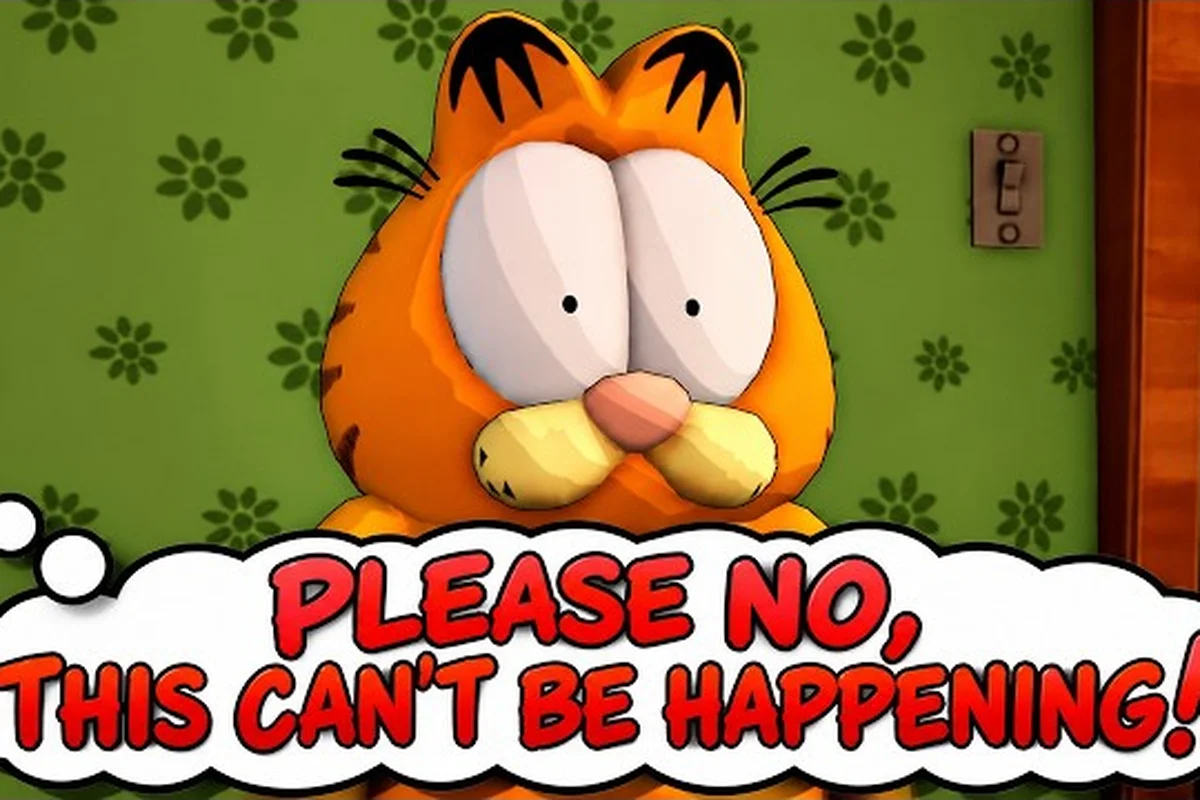
Garfield - Escape from Monday Who Is Squeak is one of the most searched character questions for this side-scrolling adventure, and the answer reshapes how the whole campaign reads. Squeak is the small, silent mouse-like creature that Garfield keeps stumbling into across the nightmare, and his recurring presence sets up the jump-scare pacing that pushes the story toward the Nermal fight and the Chef Monday finale. This guide breaks down who Squeak is, how he connects to the broader Garfield - Escape from Monday story characters guide thread, and why Pookie Bear and Arlene show up exactly when the mouse seems to disappear.
Squeak's Role in the Garfield - Escape from Monday Story
Squeak functions less like a traditional boss and more like a narrative pressure valve. The mouse darts through the background of multiple stages, disappears into the wallpaper, then reappears at the worst possible moment, and that repetition is what trains players to expect the unexpected. Community captures of the campaign, including the full walkthroughs indexed in the all-bosses compilation by packattack04082, show Squeak appearing in transition rooms between the Kitchen, the Living Room, and the Backyard, which confirms he is a structural character rather than a one-off gag.
| Story Beat | Where Squeak Appears | What Triggers the Scene | Narrative Purpose |
|---|---|---|---|
| World 1 transition | Hallway behind the pantry | Player stands still for 3+ seconds | Establishes the "something is watching" tone |
| Pre-Nermal tease | Backyard hedge maze | Player picks up a collectible | Builds dread before the Nermal fight appearance |
| Mid-game scare | Living Room rug | Loud audio cue | Punishes hesitation, rewards forward motion |
| Late-game echo | Final hallway before Chef Monday | Repeat audio sting | Recalls the earlier scares to close the loop |
That structure is why Squeak matters even though the character never speaks. The mouse anchors the fear layer of the campaign, and every other named character is positioned around the reactions he provokes.
How Squeak Connects to the Main Household
Garfield is the only playable character, and his entire movement kit is built around jumping, slapping, and rolling, which the character roster breakdown describes in full. Squeak does not interact with that kit directly. Instead, the mouse forces Garfield to break his usual lazy rhythm. The cat cannot sleep through the nightmare if a small creature keeps flicking past his peripheral vision, and that tension is what makes the rest of the supporting cast feel like a real household under stress.
Jon Arbuckle stays in the real-world flashbacks, Odie keeps getting possessed by chase sequences, Arlene drops in for emotional beats, and Pookie Bear shows up in the quiet rooms. Squeak is the one element that refuses to stay quiet, which is why player memory tends to file him under "antagonist" even though he never throws a projectile or steals a collectible.
Garfield's Abilities, Voice, and How He Reacts to Squeak
A common newcomer question is whether Garfield talks in the campaign, and the short answer is yes, but only in short, sardonic one-liners that play when the player idles or clears a room. According to community data gathered from launch-week streams, the Garfield - Escape from Monday does garfield talk system works on a cooldown of roughly 20 seconds of inactivity, which means the cat only quips when the player stops moving. That design choice turns idle behavior into a punishable state, and Squeak is the one character who punishes it most consistently.
| Ability | Input | Best Use Against Squeak Rooms | Notes |
|---|---|---|---|
| Slap | Light attack | Quick punishes after a hop | Short range, low recovery |
| Roll | Dodge + spin | Passing through scare transitions | Brief invulnerability, useful for timing jumps |
| Belly Bounce | Heavy jump | Hitting Squeak off-screen | High knockback, slow startup |
| Idle Quip | Wait 20s | Triggers a voice line | Confirms Garfield - Escape from Monday garfield abilities are voiced |
The table also highlights why players who sprint past every room tend to miss the Squeak teasers. The mouse only appears when the player stops, and the audio sting is the only signal that the jump-scare is about to trigger. Players who build a habit of clearing rooms quickly will hear Squeak far less often than players who explore, and that asymmetry is part of how the campaign sets difficulty through pacing rather than stats.
Why the Quiet Voice Design Fits the Story
Garfield - Escape from Monday strips the cast down to short reaction lines because the nightmare itself does the heavy lifting. The cat complains about Mondays, grumbles at Squeak, and groans when the screen darkens for the Nermal fight appearance, but he never delivers a long monologue. That restraint leaves room for Arlene, Jon, and Pookie to each carry one emotional beat per act without the dialogue crowding itself.
The supporting cast coverage in the supporting characters index notes the same pattern, with Arlene getting two short exchanges, Jon appearing only in the opening and the finale, and Pookie Bear providing a single quiet cutscene before the Chef Monday confrontation. Squeak fills the silence between those beats, which is why his presence feels louder than his actual screen time.
How the Nermal Fight Appearance Fits Around Squeak
The Nermal fight appearance in Garfield - Escape from Monday is the first named boss that the player encounters after the Squeak tutorial rooms, and the two are connected by design. Nermal is the "world's cutest kitten," and the nightmare version throws bouncing projectiles while summoning smaller creatures that share Squeak's hop pattern. Players who ignored the mouse earlier tend to walk into Nermal still reading the hop wrong, which is why community walkthroughs like the UTAGaming all-bosses video place so much emphasis on the pre-fight cutscene.
| Boss | Squeak-Style Mechanic | Counter | Story Role |
|---|---|---|---|
| Squeak rooms | Hop + audio sting | Move forward on the sting | Pacing tutorial |
| Nermal | Bouncing projectiles, mini-hops | Stay mid-range, punish after the third hop | First real fight |
| Odie Chase | Possessed dash | Roll through, then turn around | Mid-game escalation |
| Chef Monday | Multi-phase kitchen finale | Memorize phase transitions | Story conclusion |
Nermal is the first boss that requires real movement discipline, and Squeak is the practice dummy. The mouse never deals damage, but his hop rhythm trains the player to read the cadence that Nermal will reuse at higher speed. That hand-off is one of the cleanest examples of the game teaching through atmosphere rather than text.
Squeak's Pattern in the Backyard
The Backyard is where the Squeak-to-Nermal pipeline becomes most visible, because the hedge maze the player crosses right before the Nermal arena contains two Squeak rooms placed back to back. According to player reports summarized in the XCageGame boss run, the second Squeak room only spawns if the player stood still in the first one, which doubles down on the game's punish-idle design. Players who want a smoother Nermal entry should treat those two rooms as a single rhythm drill rather than two separate scares.
Pookie Bear and Arlene in the Squeak-Adjacent Story
Garfield - Escape from Monday pookie bear shows up in the late-game quiet rooms, right after the last Squeak scare and right before the Chef Monday finale, and his role is the emotional counterweight to the mouse. Pookie is Garfield's stuffed bear from the original comic strip, and in this campaign he functions as a soft anchor that reminds the player why the cat is fighting through the nightmare in the first place. The cutscene is short, but the timing is deliberate. It lands the moment the Squeak audio sting stops, which gives the player's ears a break and signals that the hardest section is about to begin.
| Supporting Character | Appears Around Squeak? | What the Scene Does |
|---|---|---|
| Jon Arbuckle | No, only in real-world flashbacks | Frames the opening and the ending |
| Odie | No, appears in chase fights | Carries the mid-game possession arc |
| Arlene | Yes, after the second Squeak scare | Garfield - Escape from Monday arlene role is the emotional beat |
| Pookie Bear | Yes, after the final Squeak scare | Gives the player a calm moment before the finale |
Arlene's cameo lands in the same corridor as Pookie, and the two scenes are designed to play back to back if the player keeps moving forward. The Garfield - Escape from Monday arlene role here is to give Garfield a one-line reaction that softens the sarcasm, and Pookie follows it up with a visual callback to the comic-strip bedroom. Together, those two characters close the Squeak arc by replacing the mouse's pressure with two short, warm beats.
Why the Two Scenes Get the Same Treatment
Both Pookie and Arlene appear in the same audio pocket that the Squeak sting vacates, which is the easiest way to read the design intent. The campaign uses scare-quiet-scare-quiet pacing, and the supporting cast is slotted into the quiet pockets so that the player can absorb each emotional beat without a new threat interrupting it. Players who treat the supporting cast as flavor text tend to miss that the pacing is doing real work, and the Squeak-to-Pookie handoff is the clearest example of that layering in the entire campaign.
The Three Signals Inside Every Squeak Room
Squeak rooms share three consistent signals, and players who learn to spot all three turn the mouse from a jump-scare into a free rhythm cue. The audio sting plays a half-second before the mouse hops, the background art shifts one shade darker, and the camera nudges a few pixels to the right. Once those three signals are in the player's vocabulary, the Squeak hop becomes a free window to roll forward and clear the room, which is faster than waiting out the scare.
| Signal | Window | Counter | Common Mistake |
|---|---|---|---|
| Audio sting | 0.5s before hop | Roll forward | Freezing instead of dodging |
| Background darken | 1s before hop | Pre-jump | Trying to attack the mouse |
| Camera nudge | 0.2s before hop | Time the slap | Standing still to read the next room |
The table works as a quick reference, but the real training happens by chaining the three signals together. The CartoonRush all-bosses run shows a clean example of this rhythm, and watching one or two full clears is the fastest way to internalize the timing without losing a life to a Squeak scare on every replay.
A Three-Beat Drill for Squeak Rooms
The simplest way to convert the table above into muscle memory is a three-beat drill that the player can run in any Squeak room. Step one is to wait for the audio sting and treat it as a countdown. Step two is to roll forward on the camera nudge, which lines up Garfield with the mouse's hop. Step three is to use the slap immediately after the hop lands, because Squeak's recovery window is roughly the same length as the cat's light attack. Players who repeat that loop across the first three Squeak rooms will carry the rhythm into the Nermal fight, and the boss will feel like an extension of the same drill rather than a new threat.
Why Squeak Matters More Than His Size Suggests
Squeak is small, silent, and never credited as a boss, but the character carries more of the campaign's tone than any named antagonist except Chef Monday. The mouse is the first thing players learn to fear, the first hop pattern players learn to read, and the first audio cue players learn to react to, and that triple role is what makes the rest of the cast land. Pookie works as a calm anchor only because the Squeak sting has been drilling the player for two acts. Arlene's one-liner reads as warm only because the mouse's silence has set the bar for what counts as quiet. Even Garfield's own Garfield - Escape from Monday garfield abilities feel more deliberate once the player has been forced to choose between idling and moving.
The full roster covered in the cast-of-characters deep dive puts Squeak in an unusual position: he is technically a background element, but he is the only character who appears in every world. That presence is what ties the Garfield - Escape from Monday story characters guide together, and it is why the answer to the central question is less about who Squeak is and more about what Squeak lets the rest of the cast become.
The Takeaway for Players Returning to the Campaign
Returning players usually skip Squeak because the scare no longer lands, but the rhythm drill still matters on higher difficulties where Nermal and Chef Monday reuse the same hop patterns at higher speed. Treating Squeak rooms as a warm-up rather than a chore is the fastest way to keep the muscle memory fresh between runs, and it also gives the supporting cast a chance to land, because Pookie and Arlene both appear in audio pockets that the Squeak scare has to clear first. Players who learn that handoff get a smoother, more readable campaign, and the Squeak rooms stop feeling like filler on the way to the next boss.
Frequently Asked Questions
Who is Squeak in Garfield - Escape from Monday?
Squeak is a small, silent mouse-like creature that appears in transition rooms throughout the campaign. He never deals damage, but he anchors the jump-scare pacing that trains players to read the hop pattern reused by the Nermal fight appearance and the later boss phases.
Does Garfield talk in the campaign, and when?
Yes, Garfield delivers short sardonic one-liners on roughly a 20-second idle timer, which is why players who stop moving hear more dialogue than players who sprint through. The Garfield - Escape from Monday does garfield talk system is designed to reward forward motion and to fill the silence after Squeak scares.
What role does Pookie Bear play in the story?
Garfield - Escape from Monday pookie bear appears in the late-game quiet room right before the Chef Monday finale. The stuffed bear functions as an emotional anchor, replacing the Squeak audio sting with a calm cutscene that reminds the player why Garfield is pushing through the nightmare in the first place.
Where does Arlene fit into the campaign?
The Garfield - Escape from Monday arlene role is a single mid-game cameo in the corridor after the second Squeak scare. Her short line softens Garfield's sarcasm and gives the player a quiet emotional beat before the late-game escalation toward Chef Monday.
How should players handle Squeak rooms without losing a life?
Treat each room as a three-beat drill: wait for the audio sting, roll forward on the camera nudge, then slap during the hop's recovery. That timing carries directly into the Nermal fight appearance, because the boss reuses the same hop cadence at higher speed and longer range.